
Case Studies
Battery storage installers in Dorset
How battery storage can give you cheap power round the clock
How a client used batteries to drop their energy bills
At a glance
Bungalow in Blandford
20.7 kWh
£1660
The goal
How to reduce monthly bills without a giant investment
The numbers are simple. Instead of paying around 25-30p per kWh for electricity, we can reduce this to 7-8.5p per kWh, by combining the right tariff with battery storage. We were tasked with assessing the client’s energy needs and providing a battery storage system that could provide relief from high energy prices and high monthly outgoings.
Solar panels are not required to enjoy the benefits of battery storage.
A kWh is the unit your electricity bill uses to measure how much energy you’ve consumed.
The installation
As easy as 1,2,3
1. It started with a consultation at the client’s home, where we discussed their goals, specced up the suggested system and answered any questions.
2. Installation took place in just one day, with accurate and efficient work and minimal disruption.
3. We helped the client to get set up on the best electric tariff and the battery scheduled to charge and discharge at the optimum times.
Technology
What kit is needed?
A battery system is made up of two main items; the battery and the inverter.
The battery stores electrical energy and can be scaled up to have multiple batteries working together. The inverter manages charging and converts the battery’s DC electricity into usable AC power for the home. It controls the flow of energy between the battery, the house, and the grid.
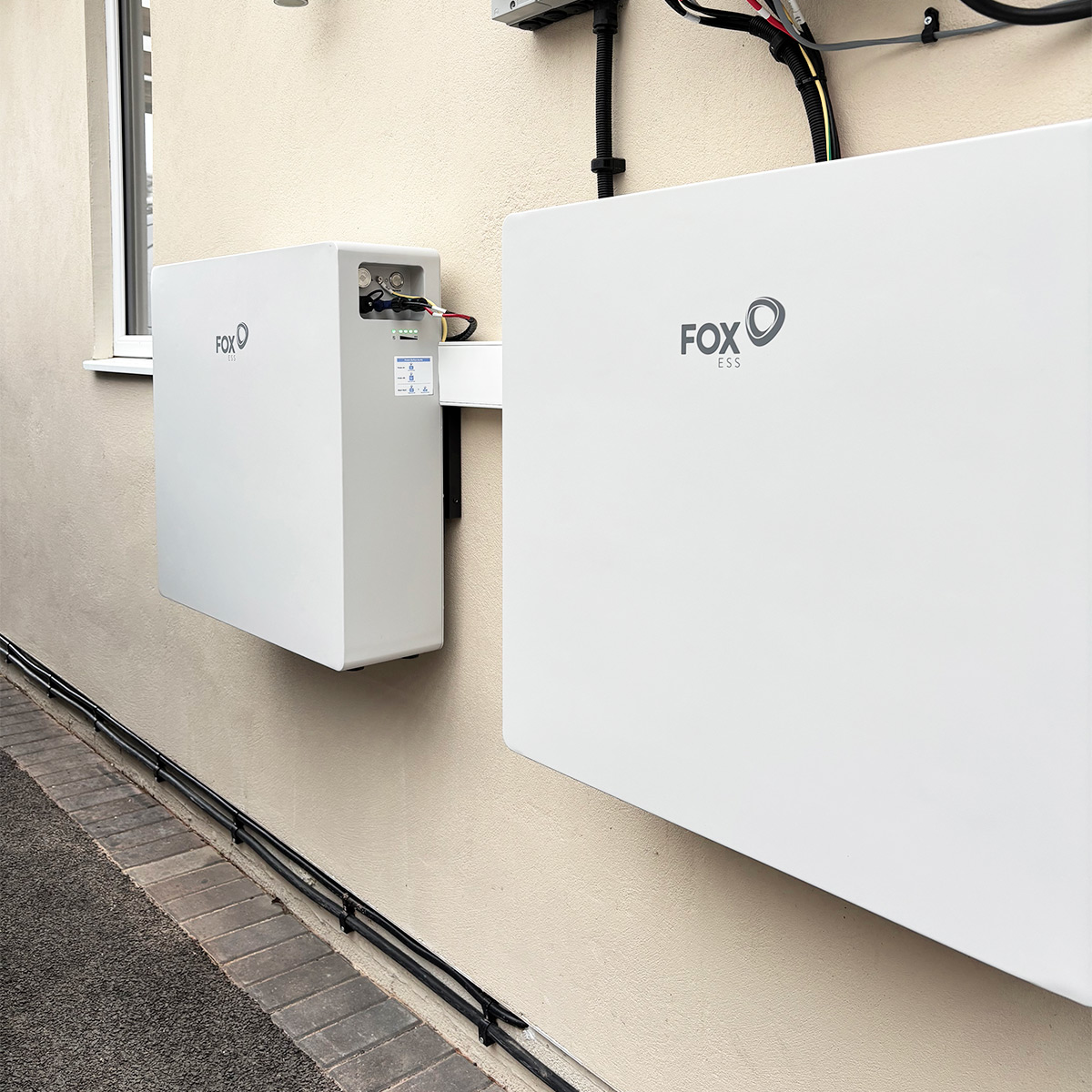
Batteries
We install batteries from Fox ESS and SolarEdge, for a level of quality that we are happy to put our name to.
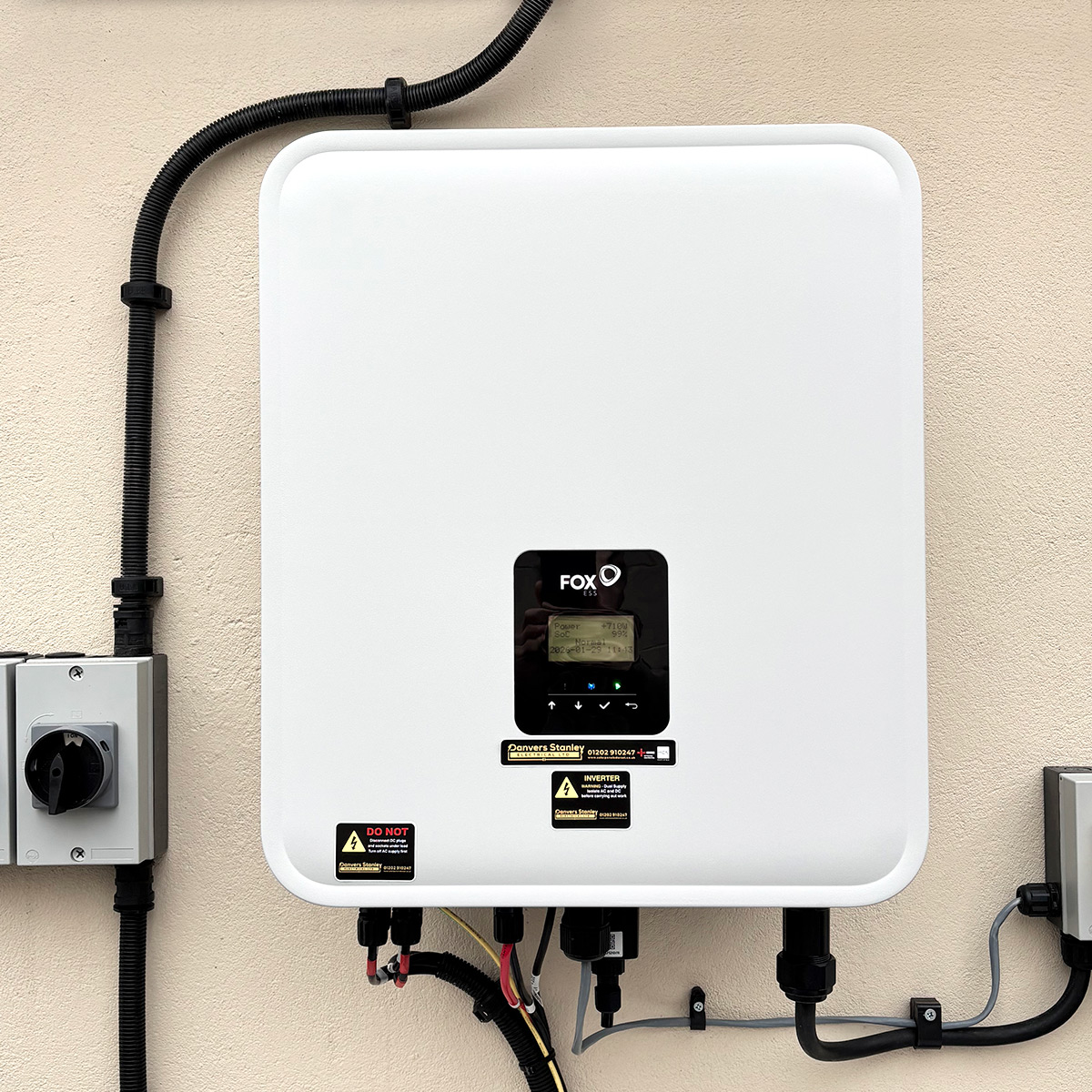
Inverters
Reliable, weather proof equipment that can be mounted inside or out.
The result
Slashing electric prices to just 8.5p per kWh
Our client was originally paying 24p per kWh for electricity. We advised them to move onto the Octopus Go tariff, which offers an ultra-low electric rate of just 8.5p per kWh between the hours of 11:30pm and 5:30am (EV owners can pay even less with rates as low as 7p per kWh). The batteries can be sheduled to fully charge to their maximum capacity in this particular system of 20.7 kWh. Outside of these times, electric is 29.14p per kWh, but instead of drawing from the grid the home is powered by the battery. This means that, depending on electric usuage, each day the home can be powered at the ultra-low rate.
Last year the home used 9,774kWh of electricity. The first year savings on account of the battery storage was £1,661.
This provides great peace of mind in a time when energy prices are high and could rise, and the savings will ensure a solid return on the investment of the battery system.
Testimonial
